
HEALTH & CARE
Lagotto Romagnolo Health
Health in the Lagotto Romagnolo is about more than genetic testing. It begins with responsible selection of the parents and continues with appropriate exercise, good nutrition, mental stimulation and regular care throughout the dog's life.
This page provides an overview of health screening relevant to the breed and the basic care needs every prospective owner should understand.
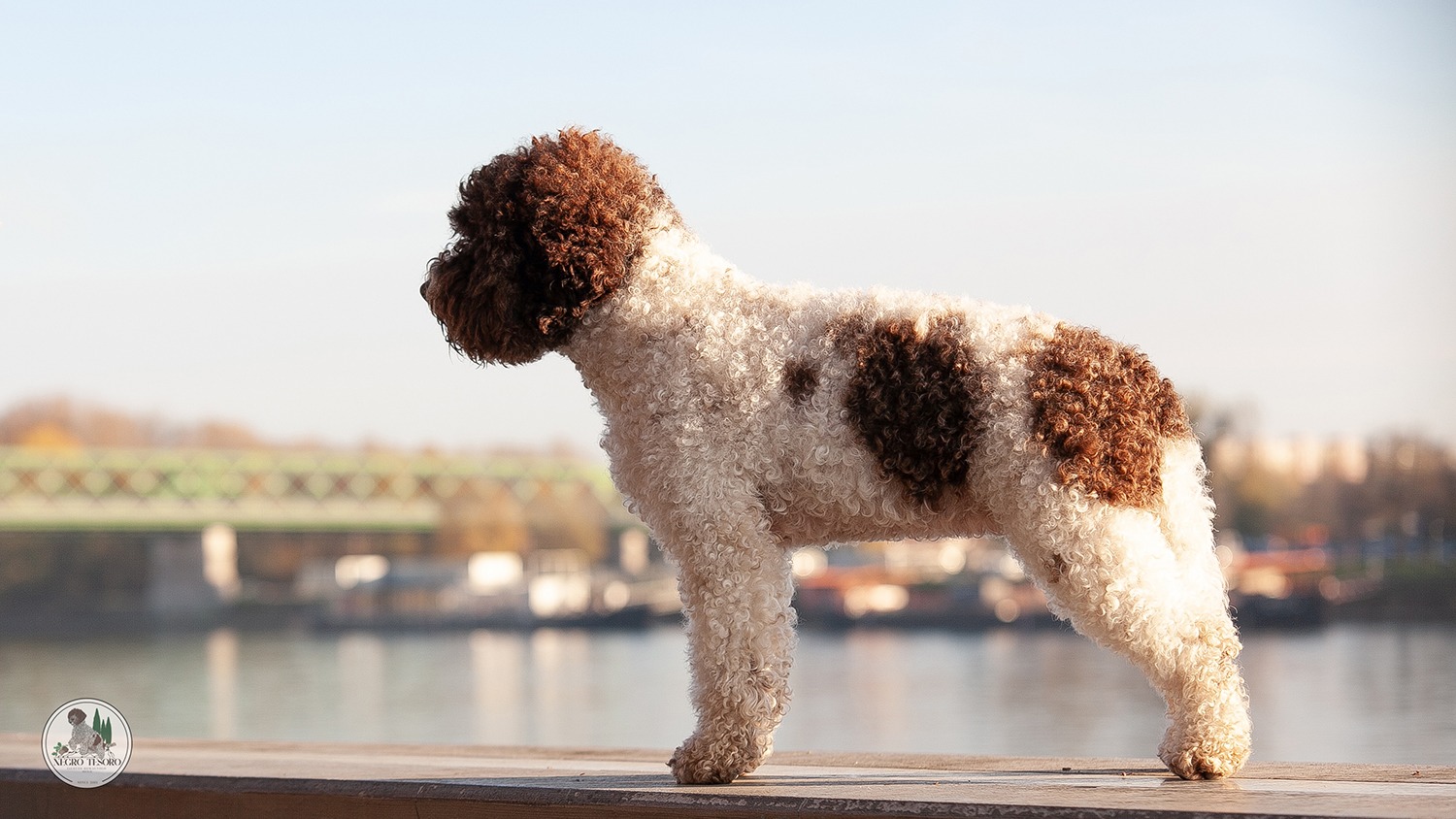
RESPONSIBLE BREEDING
Health Begins Before a Puppy Is Born
The foundation of a healthy litter is laid when the parents are selected. It is not enough for dogs to look healthy and show no obvious problems. Responsible breeding requires appropriate orthopaedic and eye examinations, genetic testing relevant to the breed and an understanding of the health profile behind the pedigree.
No result should be considered in isolation. When planning a mating, the health of both parents should be considered alongside pedigree, temperament, conformation, genetic compatibility and any known risks within the lines.
The Foundations of Responsible Breeding
Health Screening
Assessment of hips and elbows, patellae, eyes and the overall health of dogs intended for breeding.
Genetic Testing
DNA testing helps identify specific genetic variants and carriers, allowing matings to be planned to reduce the risk of producing puppies genetically affected by testable inherited conditions.
Choosing a Suitable Mating
Health is considered alongside pedigree, temperament, conformation, breed type and the genetic compatibility of the parents.
JOINTS & EYES
Screening That DNA Tests Cannot Replace
DNA tests can identify specific genetic variants, but they cannot assess the actual condition of a dog's joints or eyes. This is why responsible breeding also includes specialist orthopaedic and eye examinations.
In the Lagotto Romagnolo, hip screening is particularly important. Depending on national regulations, breed club requirements and the breeder's breeding programme, elbows and patellae may also be assessed. Regular specialist eye examinations can identify changes that may not be visible externally and may develop later in life.
What Is Assessed in the Breed
Hips
Radiographic assessment of hip development and condition.
Elbows
Radiographic assessment of the development and condition of the elbow joints.
Patellae
Clinical assessment of the position and stability of the patellae in both knee joints.
Specialist Eye Examination
Examination for inherited or acquired eye changes that may not be apparent without specialist assessment.
Results should always be interpreted according to the assessment method used, the dog's age and the rules of the organisation that evaluated the dog. Different countries may use different grading systems.
Inherited Conditions Screened for in the Lagotto Romagnolo
DNA testing determines a dog's genetic status only in relation to the specific variant being tested. A negative result therefore does not mean that a dog is "genetically healthy" or free from all inherited conditions.
These results are used primarily to plan matings responsibly and reduce the risk of producing puppies affected by testable inherited conditions.
Benign Familial Juvenile Epilepsy
Benign Familial Juvenile Epilepsy is a neurological condition recognised in the Lagotto Romagnolo. The first signs usually appear in early puppyhood and may include tremors, stiffness, uncoordinated movement or loss of balance.
In many affected puppies, the signs gradually resolve; however, the condition should not be regarded as insignificant.
Lagotto Storage Disease
A progressive neurodegenerative condition involving impaired processing and recycling of substances within cells of the nervous system.
Possible signs include an unsteady gait, poor coordination, involuntary eye movements, behavioural changes and progressive neurological deterioration.
Progressive Retinal Atrophy
prcd-PRA is one genetic form of progressive retinal degeneration. Early signs may include reduced vision at dusk and at night, followed later by further deterioration of vision and potentially blindness.
Neuroaxonal Dystrophy
A progressive neurological disorder associated with a TECPR2 variant in the Lagotto Romagnolo. Signs can appear in young dogs.
These may include impaired coordination and balance, an unsteady gait, behavioural changes and progressive deterioration of neurological function.
Hyperuricosuria
A genetic predisposition to increased excretion of uric acid in the urine. Higher concentrations can promote the formation of urate crystals and urinary stones.
Not every genetically affected dog will develop urinary stones or other clinical signs. Risk is influenced by hydration, diet and other health factors.
A carrier of an autosomal recessive variant is usually clinically unaffected and does not need to be automatically excluded from breeding. However, the dog should only be mated to a partner tested clear for the same variant. Such a mating will not produce puppies affected by that variant, although some offspring may be carriers.
Typical Coat Is More Than a Matter of Appearance
Furnishings and Shedding describe different genetic traits affecting the coat. They are not diseases, but traits that can influence the appearance of the coat and the degree of shedding.
Laboratories may report genetic results using different notation. Results should therefore always be recorded exactly as shown on the certificate and interpreted according to the laboratory's own key.
Breed-Typical Facial Furnishings
The Furnishings trait influences hair growth on the muzzle, eyebrows and limbs, features that contribute to the characteristic appearance of the Lagotto Romagnolo.
Genetic Predisposition to Shedding
The Shedding test assesses a dog's genetic predisposition to the degree of coat shedding. The final coat phenotype, however, is not determined by a single gene alone.
An Important Part of Both Health and the Breed Standard
When assessing a dog intended for breeding, the completeness of dentition, alignment of the teeth and type of bite are considered. A healthy mouth is important not only in relation to the breed standard, but also for comfortable eating and the dog's overall wellbeing.
How to Read Health Results
Genetic results describe the specific variant tested. Orthopaedic results describe the condition of joints assessed using a particular method and at a particular age.
An N/N result therefore does not mean that a dog is free from all genetic conditions. It means only that the tested variant was not detected.
Genetic Status
No Variant Detected
The tested genetic variant was not detected. The dog cannot pass that tested variant to its offspring.
Carrier
The dog has one normal allele and one variant allele. For an autosomal recessive condition, the dog is usually clinically unaffected but can pass the variant to its offspring.
Two Copies of the Variant
The dog has two copies of the tested variant. The risk of disease and its clinical significance depend on the specific variant.
Hips, Elbows and Patellae
Hips
The letters indicate the grade under the FCI system. A means no signs of hip dysplasia; subsequent grades indicate increasing severity of changes.
Elbows
A result of 0/0 means that no signs of elbow dysplasia were detected in either elbow at assessment.
Patellae
A result of 0/0 means that no patellar luxation was detected on either side at clinical examination.
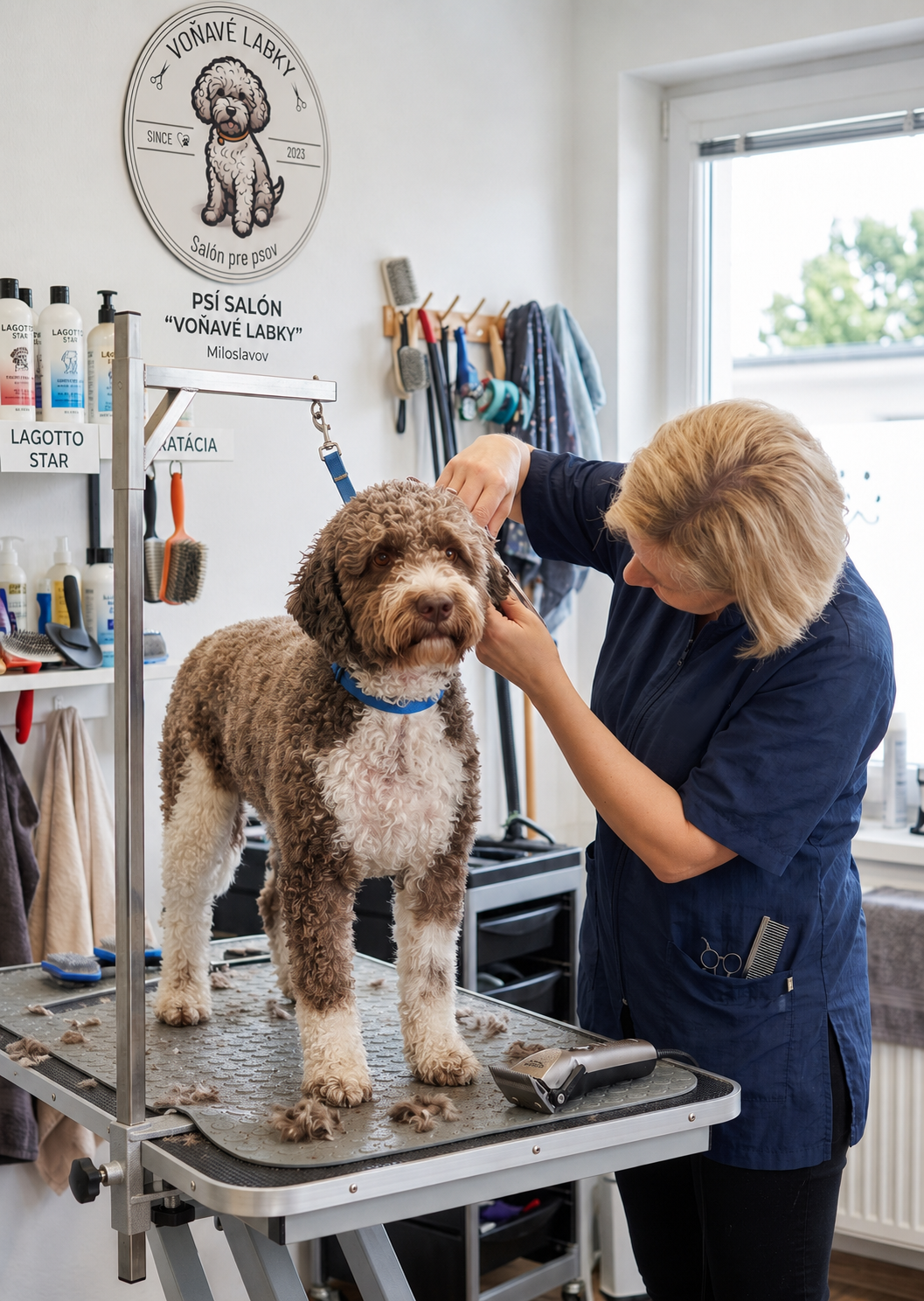
Regular Care Supports Lifelong Health
The Lagotto Romagnolo needs regular care of its dense curly coat, ears, nails, paws and teeth. This is not only about appearance. Matting, persistently damp or irritated ears and neglected dental hygiene can affect both comfort and health.
Coat
The coat should be checked regularly right down to the skin, with matting prevented and the coat trimmed as required. Grooming should preserve the breed's natural curls and rustic appearance.
Ears
Ears should be checked regularly and kept clean and dry. Redness, odour, itching, pain or excessive wax are reasons to seek veterinary advice.
Nails and Paws
Nails should be trimmed as required. After outdoor exercise, it is sensible to check the pads, the spaces between the toes and the hair around them.
Teeth
Regular tooth brushing and checks of the mouth help reduce plaque, tartar and gum inflammation.
Beware of Grass Seeds
Dry grass seeds, particularly awns, can be a serious problem and are best avoided during walks where possible. They can become lodged in the coat or between the toes, penetrate the skin, enter the ears or nose and migrate deeper into the tissues.
After walking through long or dry grass, check the ears, paws, spaces between the toes, armpits and groin. A deeply embedded grass seed can cause inflammation and may require veterinary removal or, in some cases, surgery.
An Intelligent Dog Needs More Than a Walk
The Lagotto Romagnolo is an active working breed with an excellent nose, a willingness to work with people and an ability to learn quickly. It needs appropriate exercise, regular mental stimulation, interaction with its owner and, just as importantly, the ability to settle and rest.
Appropriate Exercise
Regular walks, free movement and shared activities help maintain fitness, muscle condition and an appropriate body weight.
Scent Work
Scent games, object searches and outdoor scent work make natural use of the breed's abilities.
Training and Cooperation
Short training sessions and new tasks support concentration and strengthen the relationship between dog and owner.
Rest
Alongside activity, the Lagotto needs a calm routine, good-quality sleep and the ability to switch off without constant stimulation.
Signs That Should Not Be Ignored
Owners do not need to identify the exact cause of every problem. What matters is noticing changes in behaviour, movement, appetite or appearance and contacting a veterinary surgeon if they persist or appear suddenly.
If a dog has difficulty breathing, collapses, is in severe pain or poisoning is suspected, do not wait for the situation to develop further.
Ears, Eyes and Skin
Marked redness, swelling, discharge, unpleasant odour, intense scratching, head shaking or pain should be assessed by a vet
Movement and Pain
Lameness, reluctance to stand, sudden loss of balance, stiffness or obvious pain are not a normal part of an active dog's life.
Digestion and General Condition
Repeated vomiting or diarrhoea, blood in vomit or stool, loss of appetite, marked lethargy, fever or signs of dehydration are reasons to contact a vet.
Sudden and Urgent Problems
Breathing difficulties, collapse, sudden facial swelling, a severe allergic reaction, injury, suspected poisoning or a deeply embedded grass seed require prompt veterinary attention.
Sources Used
In preparing this page, we referred to the official breed standard, breed club materials and specialist information relating to health testing in the Lagotto Romagnolo.
The content of this page is for general information only. Individual health results, breeding requirements and veterinary questions should be considered on a case-by-case basis.
Health Is the Foundation of Responsible Breeding
When planning matings, we consider health results, genetic profile, pedigree, temperament and breed type. You can find the individual health results of our breeding dogs on their profile pages.